
Buying seafood is a little trickier than just picking up a box of mac and cheese, but with a little shopping savvy you can successfully navigate the fish counter. When buying fresh fish, the FDA advises:
Only buy fish that is refrigerated or displayed on a thick bed of fresh ice that is not melting (preferably in a case or under some type of cover).
Fish should smell fresh and mild, not fishy, sour, or ammonia-like.
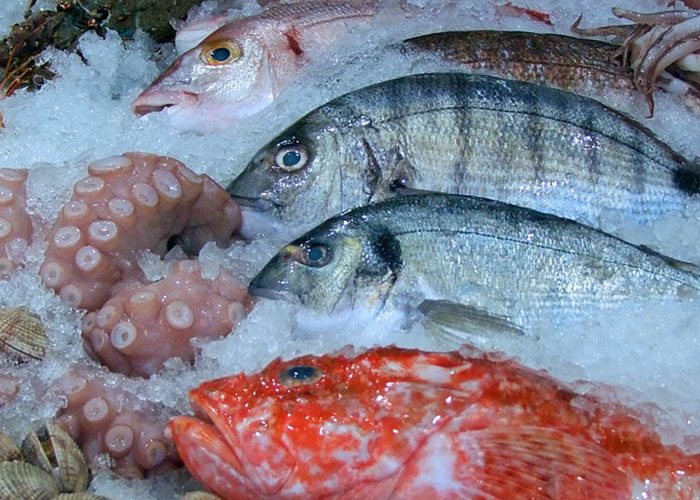
A fish’s eyes should be clear and bulge a little.
Whole fish and fillets should have firm, shiny flesh and bright red gills free from milky slime. The flesh should spring back when pressed.
When shopping for fresh shrimp and other shellfish, the FDA says:
To minimize risk of contaminants, like those discussed in the previous article, follow these guidelines:
Don’t overlook frozen fish. Look for flash-frozen fish labeled “Frozen-at-Sea” (FAS), caught by ships that operate like floating processing plants. Each day’s catch is processed, frozen in a matter of seconds, and stored at zero degrees or below. The result is fish that’s often fresher than what’s sold as “fresh,” which might be kept on ice for as long as two weeks between ship and supermarket.
According to an FAO Fisheries Technical Paper, “Sea-frozen fish, properly handled between landing on deck and loading into the freezer, when thawed are almost undistinguishable from fresh fish kept in ice for a few days.”
When buying frozen fish, look deep down in the freezer case for rock-hard fish with package dates no more than three months old. Avoid packages that are positioned above the “frost line” or top of the freezer case. Don’t buy frozen seafood if the package is open, torn, or crushed on the edges, and avoid packages with signs of frost or ice crystals, which may mean the fish has been stored a long time or thawed and refrozen. To thaw frozen fish for cooking, the best bet is to set unopened packages in the refrigerator the previous day; in a time crunch, you can thaw in a bowl of cold water on the counter, changing the water several times.
Seafood shoppers shouldn’t turn up their noses at the canned fish aisle. Here, in cans or pouches, you’ll find many of the same varieties recommended for their omega-3 content, including salmon, mackerel, herring, sardines, and tuna. Choose fish canned in water rather than oil, however—and not just to cut calories: Omega-3s can migrate into the oil used in packing and be lost when the oil is drained. Compared to water-packed tuna, oil-packed tuna has about 50 percent more calories and only one-quarter of the omega-3s.
All canned salmon is rich in omega-3s, but the amounts vary widely even for the same species—just as with fresh or frozen fish. Some canned salmon actually has as much or more omega-3s than comparable servings of salmon fillets.
Per 4 ounces (about ½ cup), regular canned salmon, with skin and bones, provides about 2,000 milligrams of omega-3s. Skinless, boneless, “premium” canned salmon contains less, but still more than most other fish, canned or fresh.
Canned salmon is also a good source of calcium, but only if you eat the bones. A 4-ounce serving of regular canned salmon has 200 milligrams of calcium (20 percent of the Daily Value). If you mash up the salmon, you may not notice the fine bones.
Moreover, most canned salmon is wild, and the label says so. Alaskan pink or sockeye (also called red or blueback) salmon is wild caught. If it’s labeled “Atlantic” salmon, it’s farmed.
© 2026 blufftonartsandseafoodfestival.site All rights reserved.